

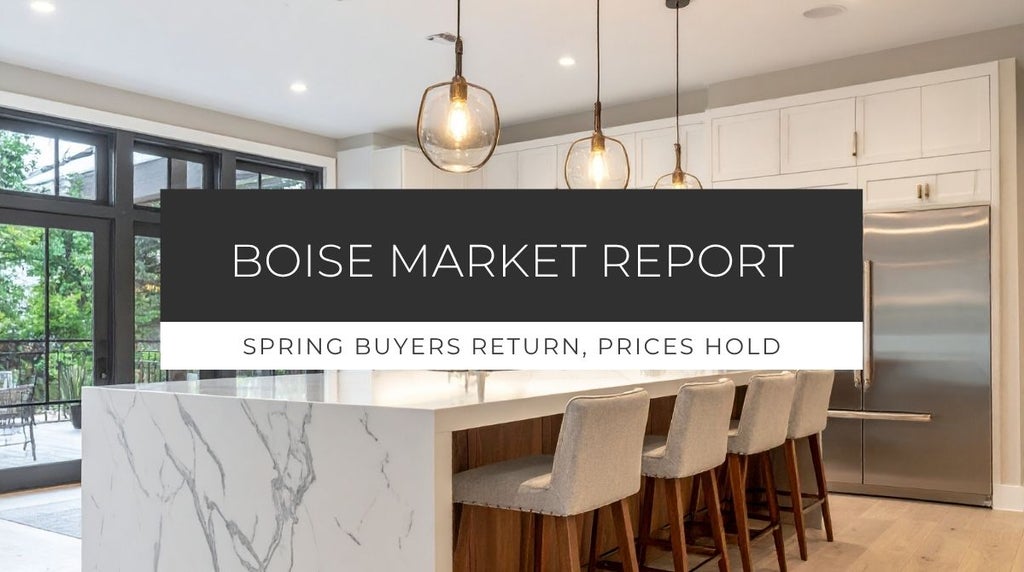
April brought more buyers to the Boise housing market, but home prices remained mostly stable.
In Ada County, the median sold price was $545,000, virtually unchanged from last year. In Canyon County, the median sold price rose 3.59% to $429,900. During a time of year when spring activity typically picks up, prices were largely flat.
Stable prices do not mean buyers were sitting still. Pending sales, which reflect homes that went under contract during the month, were notably stronger in April. Ada County recorded its strongest April for pending sales since 2022, when the market was just beginning to feel the effects of rapidly rising mortgage rates. That does not mean the market has returned to the pace of the pandemic years, but it does show that buyers are still willing to act when the home, price, and payment line up.
Homes also sold faster in April. The median days on market fell to 12 days in Ada County, while Canyon County homes took a median of 25 days to sell. The gap between the two counties is not unusual, but both figures point to a spring market where desirable, well-priced homes are still getting attention.
Active inventory or the number of homes for sale was up 15% in Ada County, giving buyers more choices than they had a year ago. Even so, supply remained limited by historical standards, with 2.36 months of supply in Ada County and 2.46 months in Canyon County. Months of supply measures how long it would take to sell the current inventory at the current pace of sales, and in both counties, it remained below the level typically associated with a balanced market.
Together, higher inventory and stronger pending sales help explain why April felt more active than the price numbers alone suggest. Buyers had more options, but the market was still absorbing much of the added supply. That is also consistent with what many local agents reported during the month: stronger showing activity and multiple-offer situations across several price points.
Mortgage rates are still weighing on affordability. The 30-year fixed-rate mortgage averaged 6.36% as of May 14, slightly down from 6.37% the prior week and below 6.81% at the same time last year, according to Freddie Mac. Rates in the mid-6% range continue to limit affordability, especially for first-time buyers and move-up buyers trying to balance higher prices with higher monthly payments.
That pressure is part of why the national housing market remains sluggish. Nationally, existing-home sales rose just 0.2% in April to a seasonally adjusted annual rate of 4.02 million, according to the National Association of Realtors, extending what has been a slow spring nationally.
Boise is not immune to those same pressures. Buyers are still payment-sensitive, and more inventory gives them room to compare homes, negotiate, or wait when a property feels overpriced. The Treasure Valley numbers tell a more complete story than national headlines alone: more supply, but also enough buyer activity to keep the market from feeling stalled.
For now, demand in the Treasure Valley market is selective rather than absent. Buyers have more choices and more leverage than they did a year ago, but stronger pending sales show they are still willing to move when the home, price, and payment make sense.
By the Numbers: 2026 Real Estate Market Overview

Median Price: What You Should Know
The median sale price provides a snapshot of home affordability in the market. It represents the midpoint of all home sales, giving buyers an idea of what they might expect to pay. A higher median price typically reflects a more expensive housing market.

Inventory Trends and What They Mean
The number of homes available for sale shows how much choice buyers have in the market. Changes in this number indicate whether inventory is growing or shrinking, which can affect competition and pricing for buyers.

What Days on Market Tell Us About Demand
The average number of days on market measures how long it takes for homes to sell. A lower number suggests a fast-moving market with high demand, while a higher number indicates homes are taking longer to sell, often reflecting lower buyer activity.
Boise Market Trends
- Median list price: $549,900 (up 5.75%)
- Median sold price: $550,000 (up 4.76%)
- Average price per square foot: $328 (up 3.47%)
- Total home sales: 324 (up 79)
- Median days on market: 5 (down 2)
- Available homes for sale: 1.73 month supply (down 0.54)
- 30-year mortgage rate: 6.36% (down 0.36)
Treasure Valley Market Trends
- Ada County: $545,000 (down 0.22%)
- Eagle: $942,000 (up 16.66%)
- Garden City: $462,500 (*fewer than 15 sales)
- Kuna: $447,990 (down 6.67%)
- Meridian: $522,495 (down 1.30%)
- Star: $554,490 (down 4.11%)
- Canyon County: $429,900 (up 3.59%)
- Caldwell: $401,255 (up 1.84%)
- Middleton: $580,000 (up 28.35%)
- Nampa: $425,495 (up 2.54%)

More From Our Blog

Select information in this We Know Boise market report was obtained from the Intermountain MLS (IMLS) on May 08, 2026. While the data is deemed reliable, it is not guaranteed. City-specific data refers to single-family homes on less than one acre, whereas county-level data includes homesites of all sizes. The "months of supply" metric is based on a 12-month rolling average. Home prices mentioned combine both existing and new construction properties. Comparisons are based on year-over-year changes unless otherwise specified.
Posted by Lisa Kohl onEnjoy this blog post? Click here to subscribe for updates
Leave A Comment